
In advanced industries such as semiconductor manufacturing, optical instruments, and precision automation, achieving an exceptional surface finish is critical. When standard machining falls short, high-precision ceramic polishing components and discs (often requiring mirror-like finishes down to Ra 0.02 μm) become essential.
However, sourcing these specialized precision components—especially when dealing with tight tolerances, non-standard geometries, or discontinued OEM parts—presents a major challenge for engineers and procurement managers.
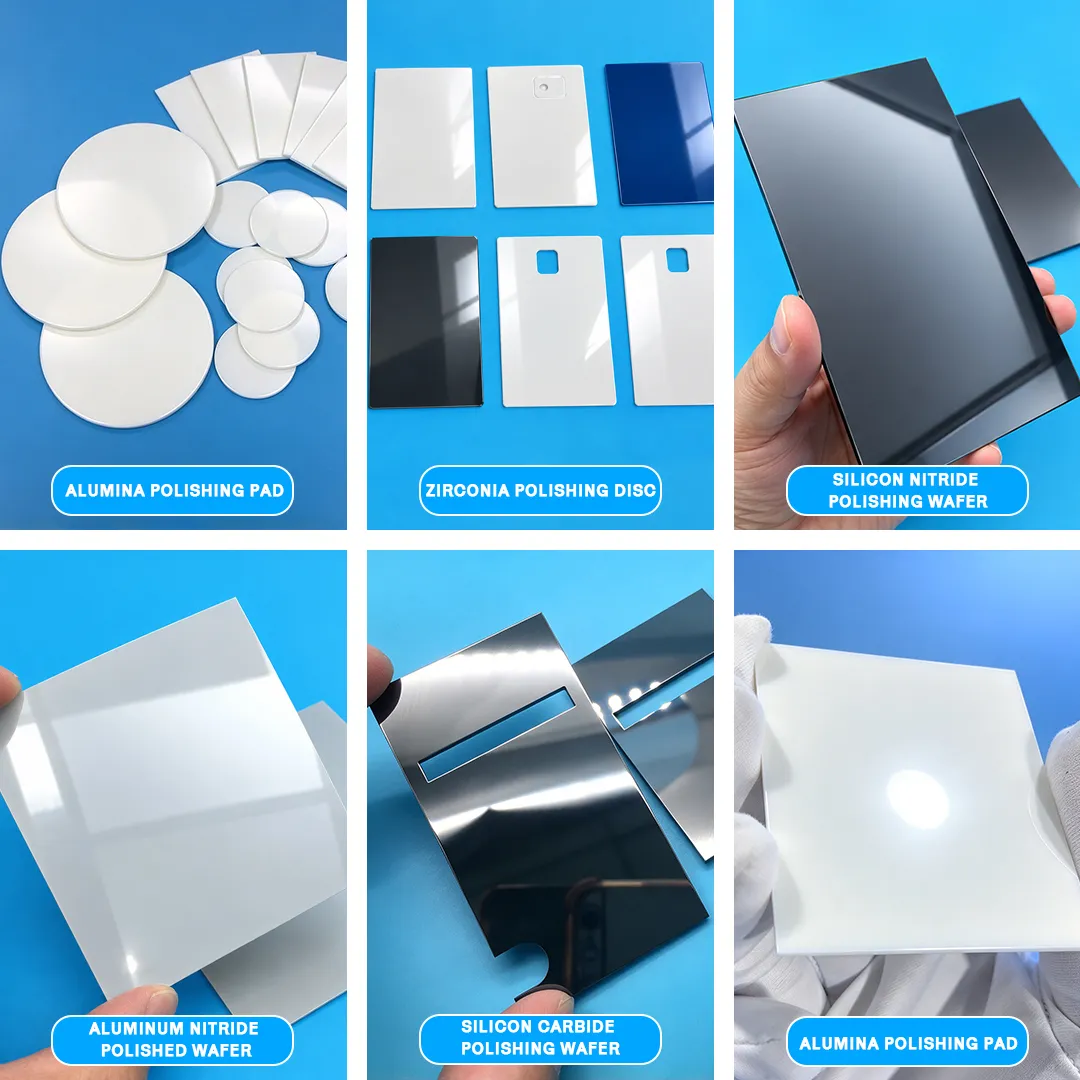
At CorTenna, we specialize in solving these exact supply chain bottlenecks. Whether you are developing a prototype or replacing a worn-out component, this guide breaks down what goes into high-precision ceramic polishing parts and how to source them efficiently.
1. What Does a “Mirror-Like Finish (Ra 0.02 μm)” Really Mean?
In technical specifications, Ra represents the arithmetic mean roughness of a surface.
A standard machined surface typically sits around Ra 1.6 to 3.2 μm, where tool marks are still visible.
A mirror-like finish of Ra 0.02 μm (20 nm) goes far beyond mere visual gloss.
💡 Note: A surface can look shiny and glossy to the naked eye, yet fail rigorous surface roughness testing. True high-precision polishing requires simultaneous control over surface roughness (Ra), flatness, parallelism, and dimensional consistency.
2. Which Ceramic Materials Are Suitable for Manufacturing High-Precision Polishing Pads?
Ceramic polishing pads are not made from a single material. Different materials vary in terms of hardness, toughness, and processing difficulty:
1. Zirconia Ceramic Polishing Discs
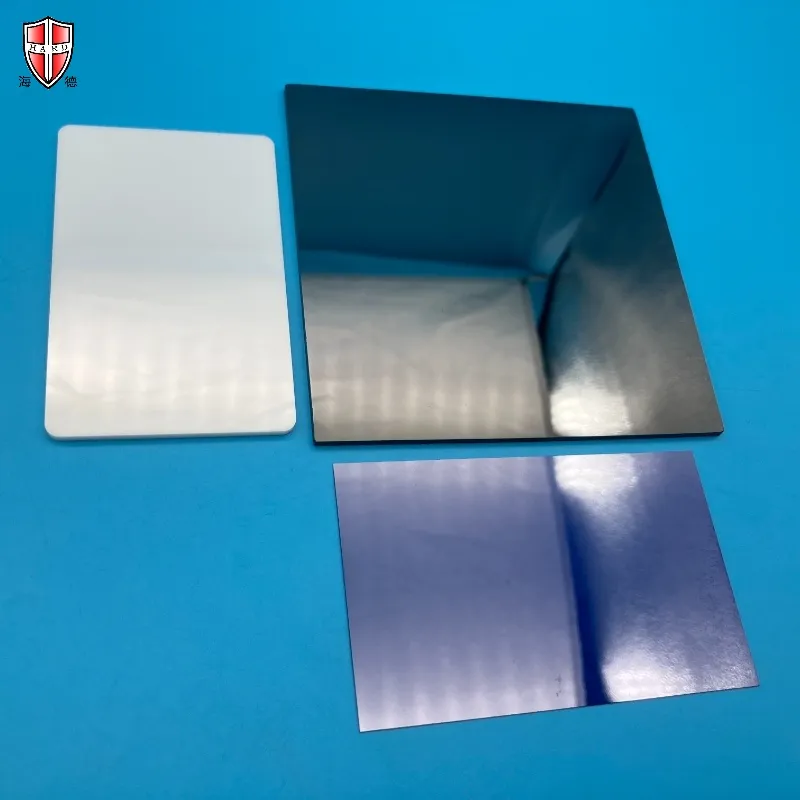
Zirconia exhibits excellent fracture toughness, wear resistance, and chemical stability, making it ideal for precision contact and structural applications.
2. Alumina Ceramic Polishing Discs
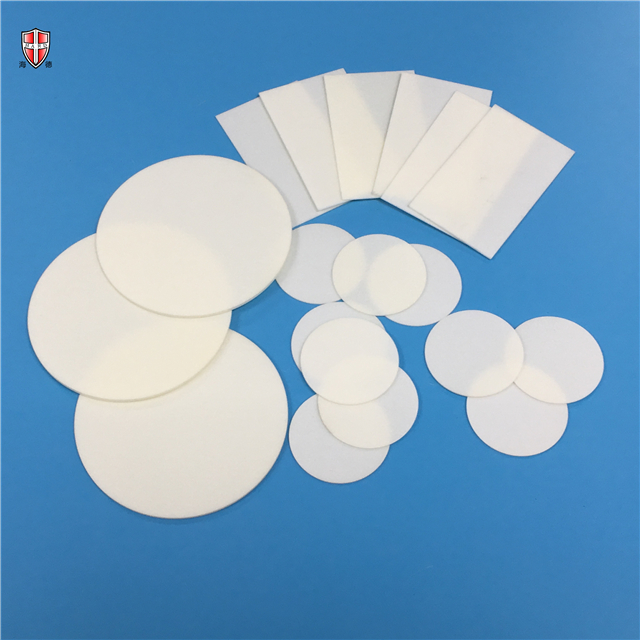
Alumina offers a favorable combination of high hardness, electrical insulation, and cost-effectiveness (available in 95%, 96%, and 99% purity).
3. Silicon Nitride & Silicon Carbide Wafers
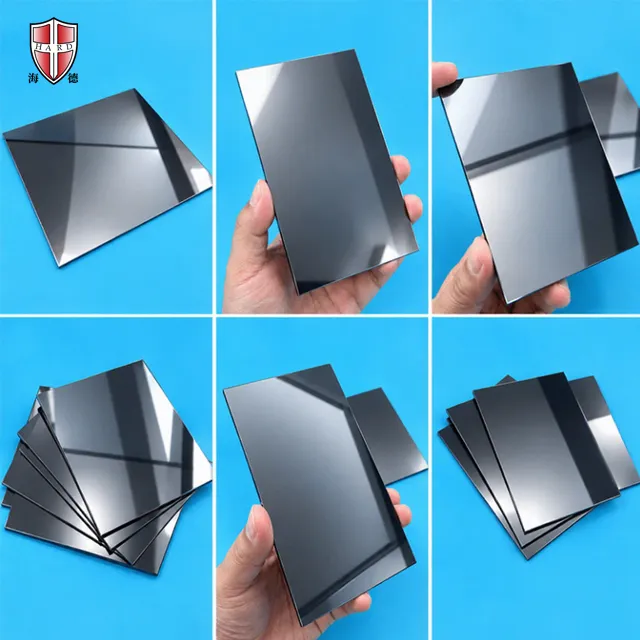
Ideal for extreme thermal shock, heavy-duty mechanical seals, and severe corrosive environments.
| Material | Key Strengths | Ideal Applications |
| Zirconia ($ZrO_2$) | Excellent fracture toughness, high wear resistance, good chemical stability. | High-stress mechanical contact, wear-resistant structural parts, precision rings. |
| Alumina ($Al_2O_3$) | High hardness, superior electrical insulation, cost-effective. | Standard precision insulators, wear plates, substrate components. |
| Silicon Nitride ($Si_3N_4$) | High strength, excellent thermal shock resistance, toughness. | High-temperature environments, thermal shock conditions, high-speed rotating parts. |
| Silicon Carbide ($SiC$) | Extreme hardness, high-temperature resistance, supreme wear resistance. | Severe corrosive environments, heavy-duty mechanical seals, semiconductor handling |
3. Why Precision Ceramic Manufacturing Requires Custom Engineering
Because advanced engineering ceramics possess high hardness and near-zero plastic deformation capacity, shaping them to sub-micron tolerances requires a strict multi-stage sequence:
Initial Forming and Sintering: Establishing baseline density and structural integrity.
Precision Lapping/Grinding: Incrementally refining dimensions, flatness, and thickness allowances.
Precision Polishing: Tailoring specific polishing media and parameters to each material.
Inspection and Quality Control: Verifying Ra values, parallelism, and dimensions against engineering standards.
Have a High-Precision Ceramic Part to Source or Reproduce?
Do you need custom ceramic polishing discs, wear components, or replacement parts for your equipment? You don’t need to have a formal engineering drawing to get started.
At CorTenna, we bridge the gap between your requirements and specialized manufacturing:
No Drawing? No Problem: Whether you have a CAD file, an old worn part, a reference photo, a part number, or simply an equipment model, send us what you have.
Small-Batch & Prototypes: We specialize in low-volume, prototype, and custom replacement production.